
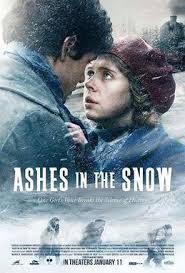
The book is set in December 1943 in Auschwitz, where an SS officer is found murdered under mysterious circumstances. To solve the case, Criminal Inspector Hugo Fischer is sent from Berlin to the camp. Fischer is an experienced investigator, but also a man struggling with his own illness and a growing doubt about the regime he serves.
When he arrives at Auschwitz, he encounters a place marked by extreme brutality, cold, and systematic death. In the midst of this hell, he must investigate a single murder — a task that quickly proves far more complex than he expected.
The only witness to the murder is a young Jewish boy named Gioele, imprisoned in the camp with his family. Gioele is autistic and does not speak, but he has a special gift for drawing — and through his drawings, he shows Fischer details about the crime scene and the events surrounding the murder.
As Fischer tries to piece together the clues and interrogate both SS officers and prisoners, he is gradually confronted with the horror the camp conceals. The investigation draws him deeper into the moral and human darkness of Nazism, and he begins to see how the evil within the camp is intertwined with the system itself.
As he gets closer to the truth about the murder, it becomes clear that the crime has both personal and political dimensions. In the end, Fischer must choose between fulfilling his duty as an investigator or following his conscience as a human being — a decision that carries fatal consequences.
In terms of genre, the novel combines historical crime fiction with a Holocaust theme, infused with strong moral and ethical undertones.
Ramunno’s depiction of Auschwitz is chillingly realistic. The descriptions of life in the camp — the smell, the cold, the fear — make the reader feel the grotesque and inhuman conditions that define the place.
It’s not just a murder mystery. At its core lies a profound ethical question: how can one investigate “a single murder” in an extermination camp where so many die systematically? What does justice mean in a system where the system itself is evil? That conflict gives the story both weight and depth.
The book is a crime novel full of plot twists and unexpected revelations. It doesn’t merely serve as a historical portrayal but maintains its suspense all the way to the end.
Ashes in the Snow is a powerful and moving reading experience — a book that not only offers suspense but also forces the reader to reflect on moral questions and on humanity’s capacity for action in the darkest of times. It creates a stark contrast between human evil and human courage, between the raw power of the system and the resistance of the individual, however small it may be.
If you enjoy historical crime novels that question guilt and responsibility — and want a story that resonates emotionally — then Ashes in the Snow is definitely worth reading.




Seneste kommentarer